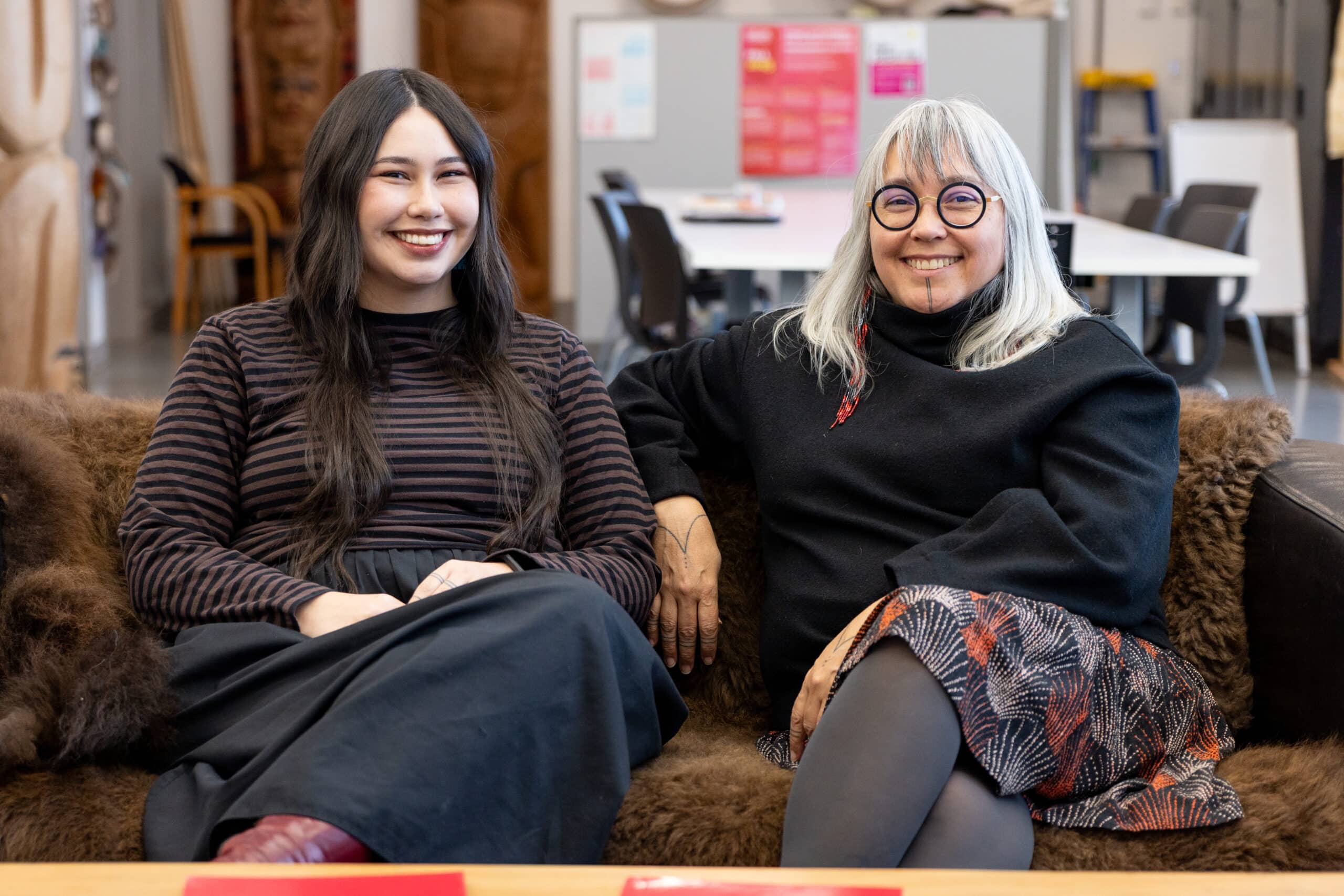
The second annual Atii! Inuit Film Festival at ECU showcased contemporary film and performance by Inuit artists working across the country and beyond.
The second annual Atii! Inuit Film Festival at Emily Carr University of Art + Design (ECU) offered an exciting opportunity for Inuit to gather and share their culture with the southern community, say participants.
Celebrating International Inuit Day, Atii! showcases the diversity of contemporary Inuit filmmaking with works by artists living in Inuit Nunangat (the Inuit homeland) as well as across Canada and in other circumpolar regions, including Greenland.
“There are so many Inuit filmmakers, and their work touches so many genres — animation, oral storytelling, performance. There’s a huge breadth. We could hold this event once a month and we wouldn’t run out of films,” says Leanne Inuarak-Dall (BFA 2025), who showed her film, I Don’t Know How, at Atii! 2025. The work documents a 2021 performance during which Leanne attempts to recreate an Inuit string figure representing a caribou using instructions published by anthropologist Franz Boas in 1888.
“There’s so much to see, which makes the festival an exciting moment for Inuit in the province to come together and share our culture with the city.”
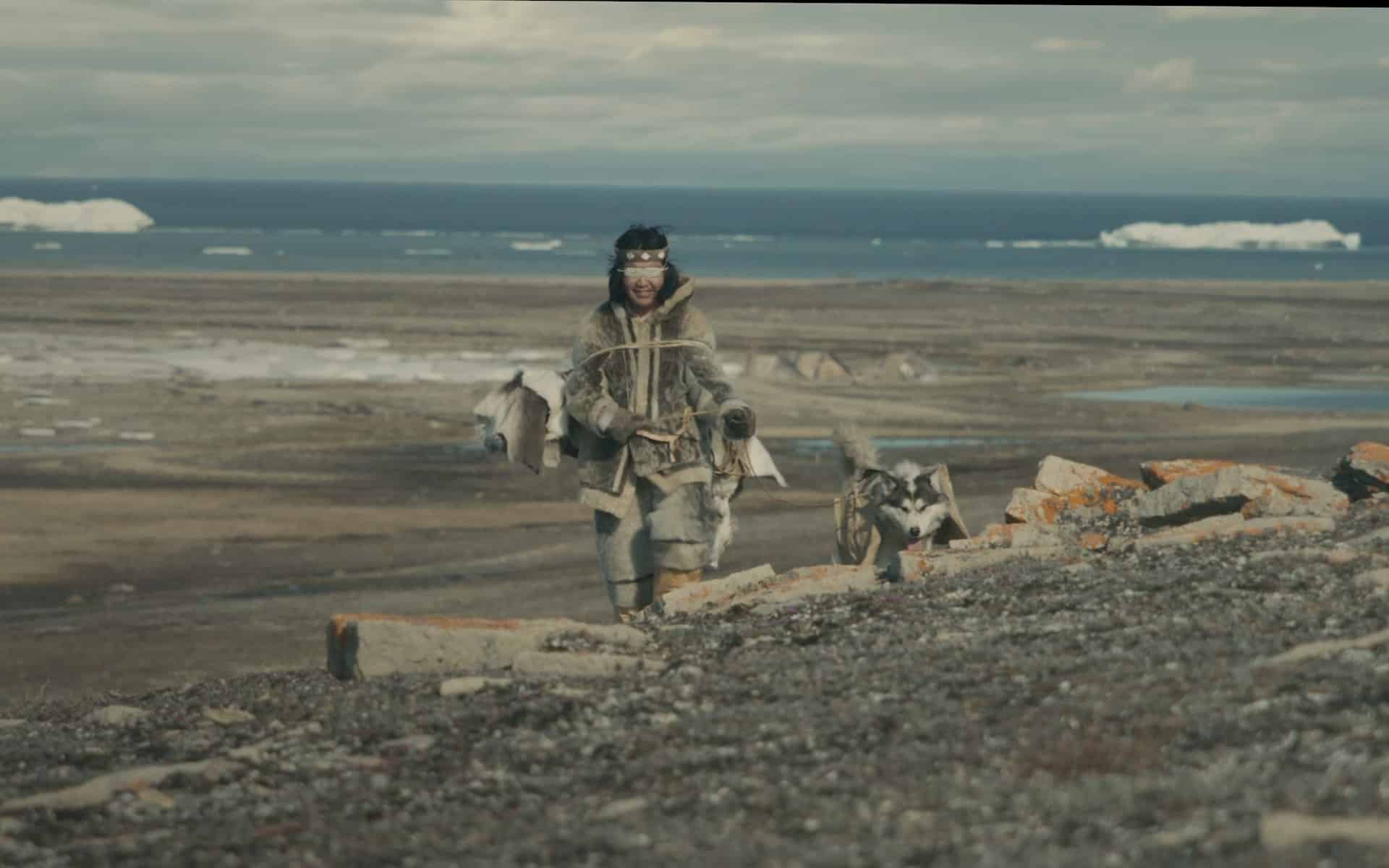
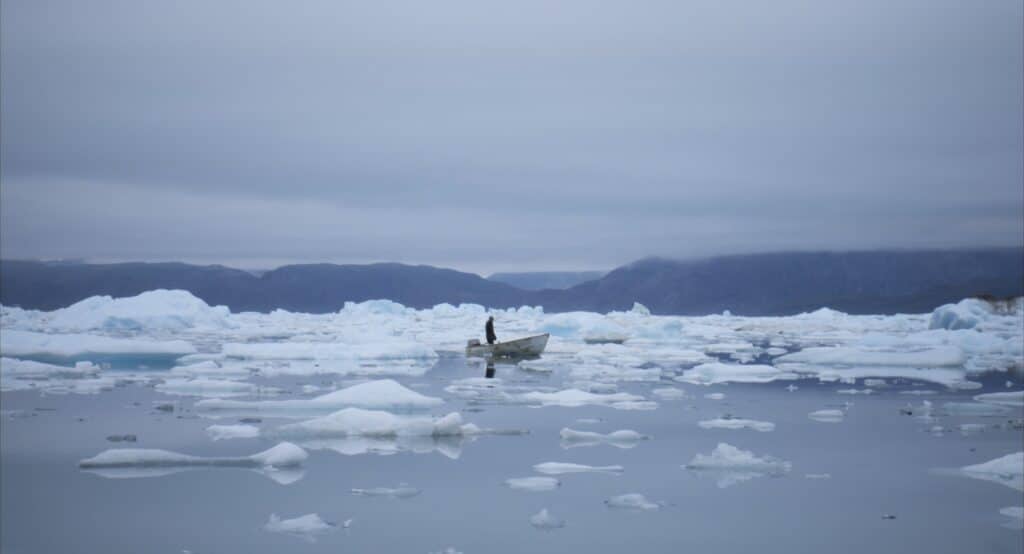
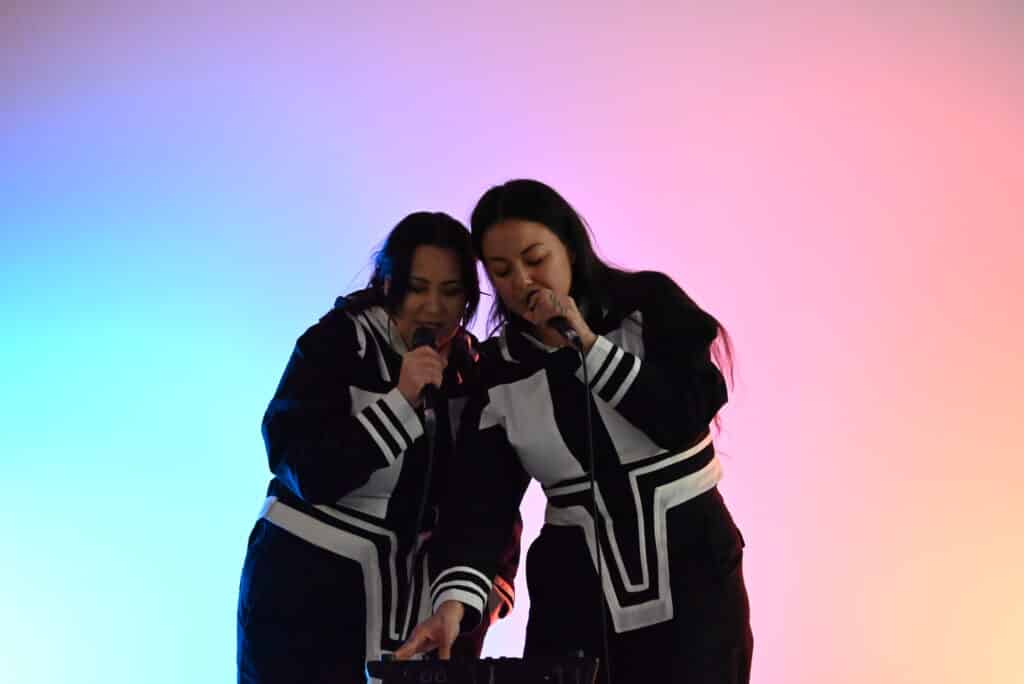
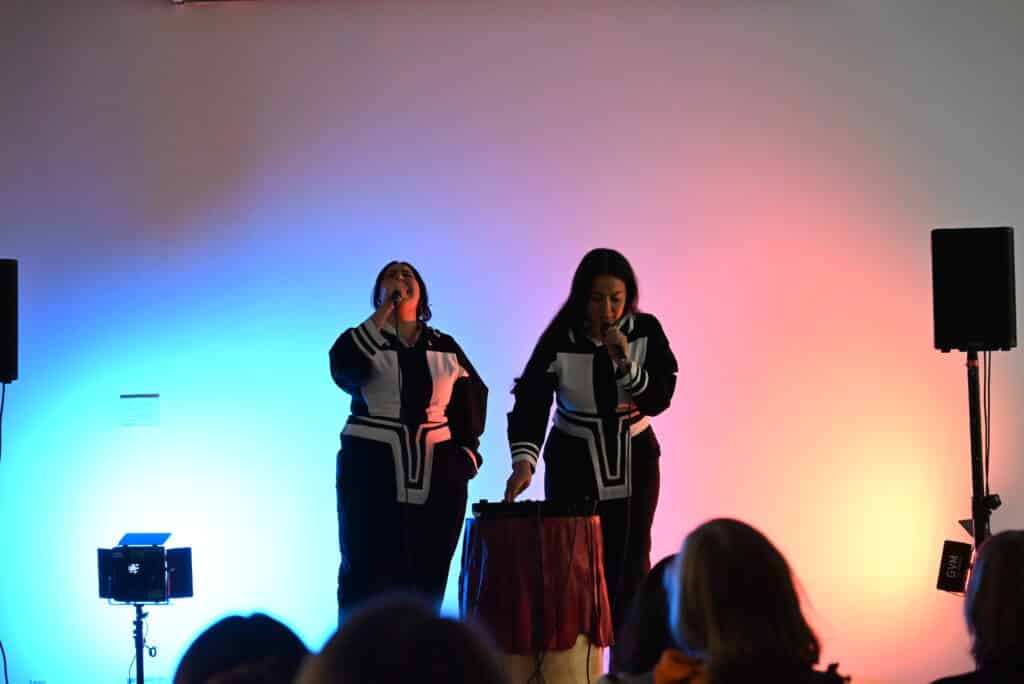
Organized by Kajola Morewood, Associate Director of Aboriginal Programs at ECU, with support from the Aboriginal Gathering Place (AGP), the annual event is both free and open to the public. The 2025 edition brought together short films from across genres by more than half a dozen artists. It also featured a screening of Uiksaringitara (Wrong Husband), the latest feature by celebrated filmmaker Zacharias Kunuk, as well as a live performance by contemporary throat-singing duo PIQSIQ.
While Vancouver has not historically been regarded as a major urban hub for Inuit in the diaspora, Kajola notes the Inuit population in BC — numbering more than 1700 people, according to Statistics Canada — is growing. Atii!, an Inuktitut word which loosely translates as “Let’s go!,” embodies her aim of bringing greater visibility to the presence of her community and their vibrant culture.
“Part of the goal is to say, ‘We’re here too. You may not hear about us as much, but we’re doing amazing things,’” says Kajola, who is ECU’s first recorded Inuit grad. And as with Zacharias Kunuk, who has described his filmmaking practice as a way of conducting his own investigation into Inuit history, culture and language, Kajola says the festival offers opportunities for Inuit in BC to advance a mutual understanding of their community’s depth and dynamism.
“Even with my own art, I’m learning about a cultural context I didn’t grow up in, but which shapes me in important ways.”
Leanne agrees, noting Atii! is a welcome opportunity for Inuit in BC to get to know each other better.
“One of the most important things about the event is for Inuit to gather, because it doesn’t get to happen in Vancouver often enough,” says Leanne, who works as a Research Assistant at the AGP.
“The Inuit in BC are still in the nascent stages of organizing, so this is one of the few opportunities we have to all hang out. Even having more than three or four of us in a room is a special occasion. It’s one of my favourite things, and events like these — that are free and have exciting artists in attendance — are the kinds of opportunities that will help us grow closer as a community.”
As the festival continues to grow, Kajola hopes to see a broader scope for the kinds of art and artists included in the event.
“Ultimately, I would love to see a week-long series to highlight a wider range of practices from all kinds of artists,” she says. “There are so many wonderful Inuit practitioners, and it’s great to have a way to bring them all together to celebrate what we do.”
More About Aboriginal Programs at ECU
The Aboriginal Program Office provides culturally appropriate support that encompasses both traditional and contemporary artistic and cultural expressions of Aboriginal peoples and is a valuable resource for students to access traditional materials/supplies.
The Aboriginal Program team also assists with the promotion and coordination of events and workshops related to Aboriginal art and culture, and is responsible for providing information regarding Aboriginal funding, scholarships and awards.
Visit the Aboriginal Gathering Place online to learn more about their programming and resources.
Want more stories like this one delivered twice a month to your inbox?
Subscribe to our FREE Emix newsletter today!